From Dark Places
Some stories don’t belong in the light.
They belong in the holler after the last lantern goes out. In the rot beneath the porch boards. In the sound the woods make when the woods shouldn’t be making any sound at all. They belong in the places your grandmother warned you about and your grandfather pretended not to know. The places Appalachia has always kept, quiet and patient, waiting for someone with the nerve to write them down.
That is what Darkling Press is here for.
We publish from the dark corners. The damp places. The moonless stretches of ridge where something is always watching and you will never quite see what it is. We are not interested in the mainstream and the mainstream is not what we are. We are the other thing, the literary vein that runs beneath the surface of the familiar, older than genre, more honest than comfort.

Our work is rooted in place. In the specific and irreplaceable weight of Appalachian land, its beauty, its violence, its long memory, and its refusal to let the dead entirely go. We publish fiction and prose that understands that the paranormal is not a departure from reality but an extension of it. That the ghost is not the story. The story is what made the ghost.
We began, as most true things do, with a single voice. HA Hutson’s Autumn Chills, quiet dread accumulating like woodsmoke. Haunting Vengeance, where the darkness has a name and a reason. Watcher on the Mountain, because something has always been watching, long before we arrived, and will be watching long after.
These are the kinds of stories we exist to tell.
And we are looking for more of them.
If you write from the margins, from the forgotten hollows, the uneasy silences, the places the popular publishers don’t know how to hold, Darkling Press may be where your work belongs. We are small. We are deliberate. We are building something with a spine and a shadow.
We are not for everyone.
We are for exactly the right ones.
— Darkling Press


Who We Are
A publishing house built by writers, for writers.
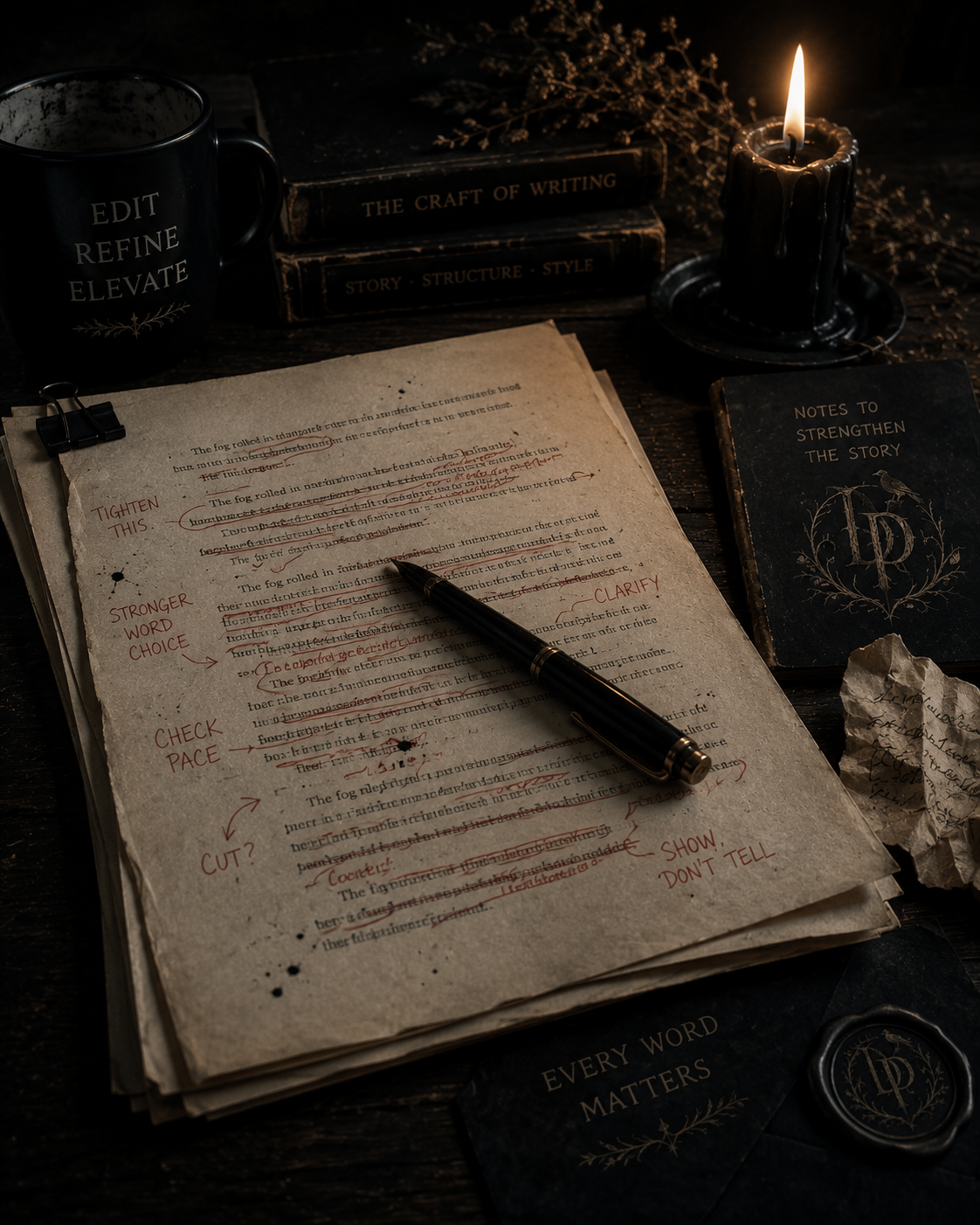
“A cooperative effort: writers helping writers build a publishing house together.”
Darkling Press is a publishing house built by writers, for writers.
We’ve worked this industry from every side. As writers, inside traditional houses, and entirely on our own, on both sides of the Atlantic. What we found was an industry that hasn’t kept pace with itself: writers are expected to build their own platforms, edit their own work, and market their own books, then handed a fraction of the profit for the privilege, often less than 15%, sometimes as little as 5%.
That math doesn’t hold up. Not when the tools to do this differently already exist.
So we built something new: a cooperative press where writers support writers, sharing established workflows and hard-won experience instead of guarding it. Streamlined methods, built from real successes and real failures, are handed on rather than held back.
Nothing here is set in stone, publishing shouldn’t be either. It’s an industry that changes constantly, and Darkling Press is built to change with it, alongside the writers who make it up. We’re not just publishing books. We’re building careers, together.
The Stories We Seek
Dark literary fiction. Appalachian gothic. Paranormal rooted in place.
“We are not for everyone. We are for exactly the right ones.”
Darkling Press publishes dark literary fiction, Appalachian gothic, and paranormal work rooted in a specific sense of place. Writing that treats the land itself as a presence, not a backdrop, and treats the paranormal as a natural extension of that world rather than a separate genre bolted on.
We’re looking for the space most publishers skip: not mass-market paranormal built for volume, and not literary fiction that flirts with darkness without committing to it. We want writers who commit, who write from the dark corners because that’s where the story actually lives, not because darkness is trending.
The voices we’re drawn to are unhurried and interior: lyrical, meditative prose written as much to be heard as read. Work that sits with human nature, time, consequence, and limitation, and lets the paranormal rise out of it naturally when it does. Grounded, specific, unafraid of its own shadows.
If your work comes from the margins, the forgotten hollows, the uneasy silences, the places the mainstream doesn’t know how to hold, it may belong here.
Where the Darkness Learned to Speak
Literary craft first. Genre second. Darkness always.
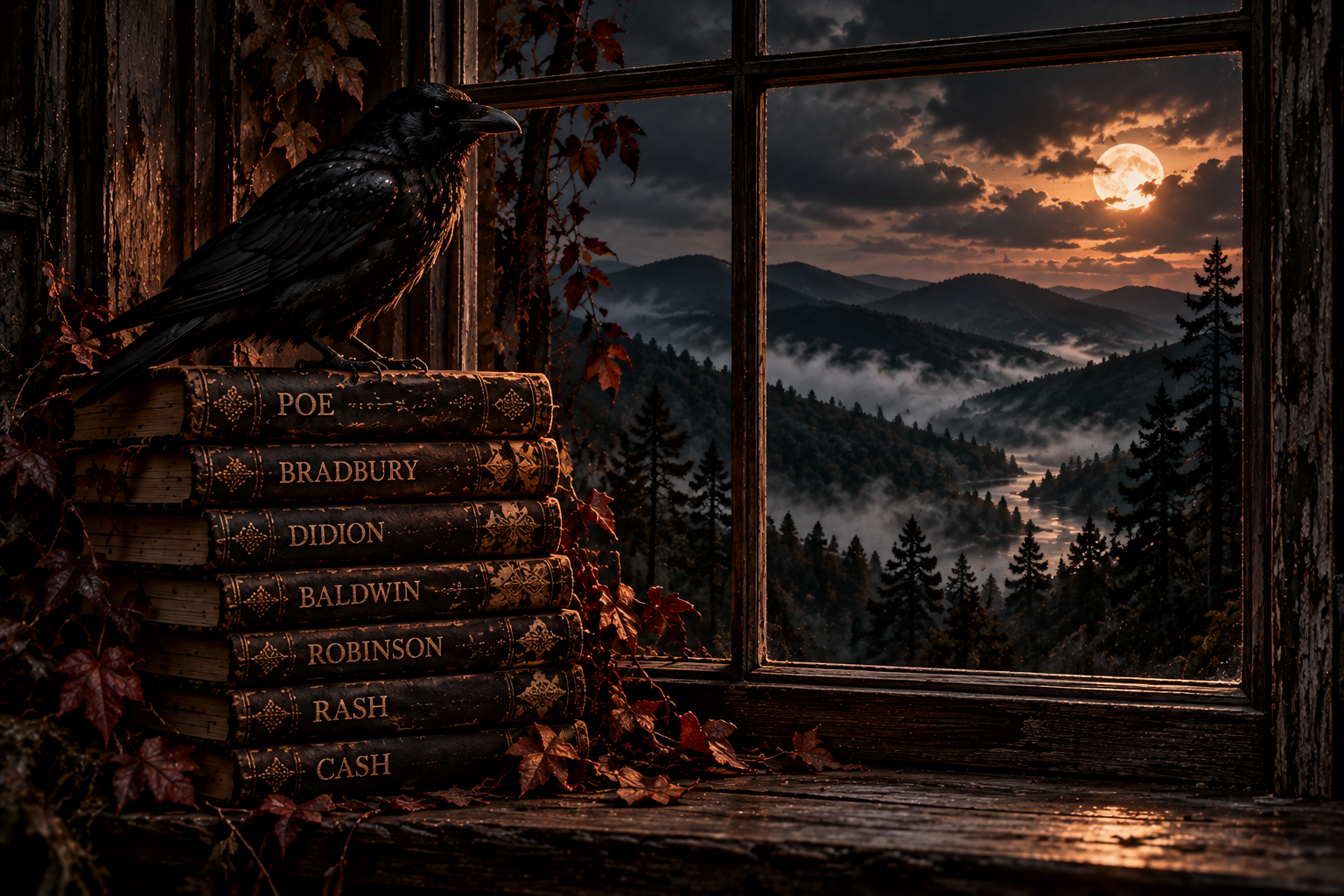
“Written to be heard, long before recording caught up.”
Darkling Press is literary first; genre is where the story happens to live, not what defines the writing. Our influences sit with writers who treat interior life as the main event: Joan Didion’s clarity, James Baldwin’s reckoning, Marilynne Robinson’s patience with the sacred and the strange. We’re after prose that can hold a silence.
For the darker lineage, two names run deeper than any other. Edgar Allan Poe, first and always for prose and voice, for knowing exactly how to put a feeling into a shadow and a shadow into a soul. And Ray Bradbury, who never wrote at our level of dark or our particular ground, but whose voiceand his lifelong love of spinning the stranger, quieter tale shaped us anyway.
“The literary vein that runs beneath the surface of the familiar — older than genre, more honest than comfort.”
Poe is also why we build for the ear as much as the page. His work was written to be heard long before recording made that literal, proven again and again by Vincent Price, on record and on screen. That’s the tradition we’re working in: story built to survive being spoken aloud.
Within that lineage, we’re rooted specifically in Appalachian Gothic, in the tradition of writers like Ron Rash and Wiley Cash, who treat the mountains as a character and never mistake regional for small. Our stories carry that same commitment to place: the ridge, the holler, the woods that remember.
Our identity is the meeting point of all of it: literary craft, a darker lineage built to be heard, and a genre commitment to a specific place, held together without apologizing for any of it. We don’t write villains. We write consequences.
Why the Dark Calls to Us
We didn’t choose the dark. We just stopped pretending otherwise.
“They won’t tell you to write something brighter. They’ll tell you to write faster.”
Darkling Press doesn’t publish darkness because it sells. We publish it because it’s honest. After all, it’s how some of us have always seen the world, and pretending otherwise never fit.
Dark fiction and horror carry a stigma that has nothing to do with how many people actually read it. It gets consumed quietly, downloaded at night, read under headphones, never mentioned at book club. We know that stigma personally, not just as a market fact. We’ve been told to write something brighter, something easier to bring up at dinner. We didn’t, and we’re not going to start now.
“The discomfort other people have with the dark is their limitation, not ours.”
That’s the belief beneath everything else here: other people’s discomfort with the dark is their limitation, not ours. We’re not interested in performing darkness for effect. We’re interested in writers who actually live there who find something true in the hollow places, in the things that move in after loss, in the woods that remember more than we do.
Darkling Press exists because that audience and those writers were always out there. They just needed a press willing to stop apologizing for the dark and start building something in it.
A Different Kind of Press
A partnership, not a hierarchy.
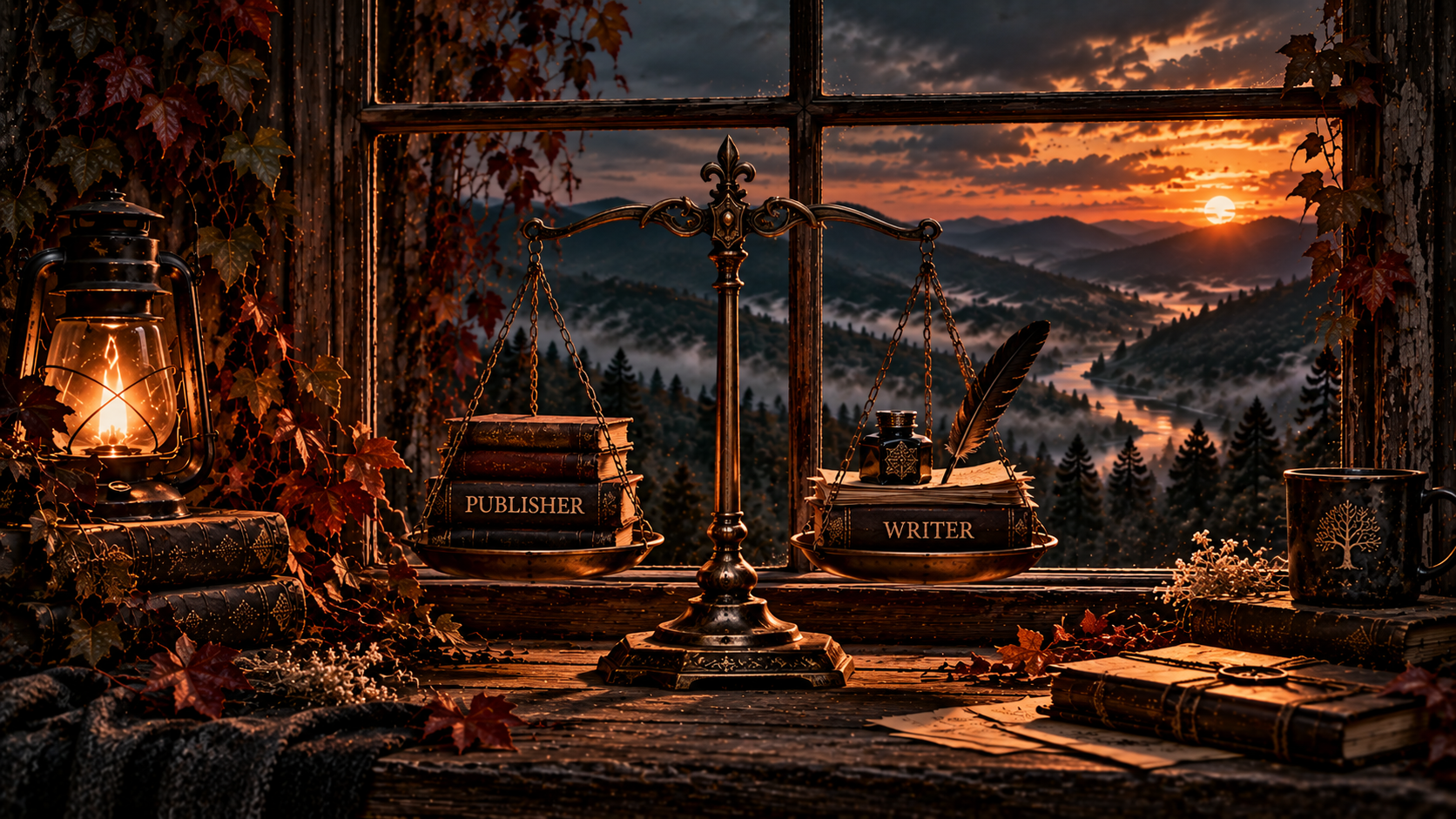
“The people who create the work should be the ones who benefit most from it.”
Good publishing starts with one simple standard: the people who create the work should benefit most from it. Right now, most of the industry doesn’t meet that standard. Writers build their own platforms, edit into the manuscript, run their own marketing, and still walk away with a fraction of the profit, often less than 15%, sometimes as little as 5%. That’s not sustainable, and it was never fair to begin with.
We believe publishing should function as a partnership, not a hierarchy. That means transparency about how a book actually earns money, workflows that get shared instead of hoarded, and a structure where one writer’s success strengthens the group instead of getting siphoned out of it. It means editors who protect a writer’s voice instead of sanding it down to fit a trend, and a press that adapts as fast as the technology already has, instead of clinging to a rigid model built for a different era.
Good publishing should build careers, not just release books. It should trade breadth of reach in year one for lasting loyalty. And it should never ask a writer to carry the whole weight alone while somebody else keeps the lion’s share of what that weight produced.
The Mark a Story Leaves
A chilling clarity that stays with you.

“A chilling clarity that leaves the reader thinking long after the book is closed.”
We believe good writing shouldn’t feel like work, not for the writer laboring over it, and not for the reader making their way through it. It should move. It should be clear.
That doesn’t mean simple. It means writing that doesn’t ask a reader to translate it, guess at it, or work to be let in. The prose should meet you exactly where you are and pull you the rest of the way. Clarity isn’t the opposite of depth. The two should exist in the same sentence.
“Not difficulty disguised as depth. Just the real thing, said clearly enough to haunt you.”
What we’re after is a chilling clarity: language precise enough to cut straight to feeling, and dark enough to leave a mark. A story that closes on the last page and stays open in the reader’s mind long after the kind of book you finish and then sit with, quietly, because something in it followed you out.
That’s what we’re building toward. Not difficulty disguised as depth. Just the real thing, said clearly enough to haunt you.
A Trade of Talents
Every writer brings something. Every writer needs something.
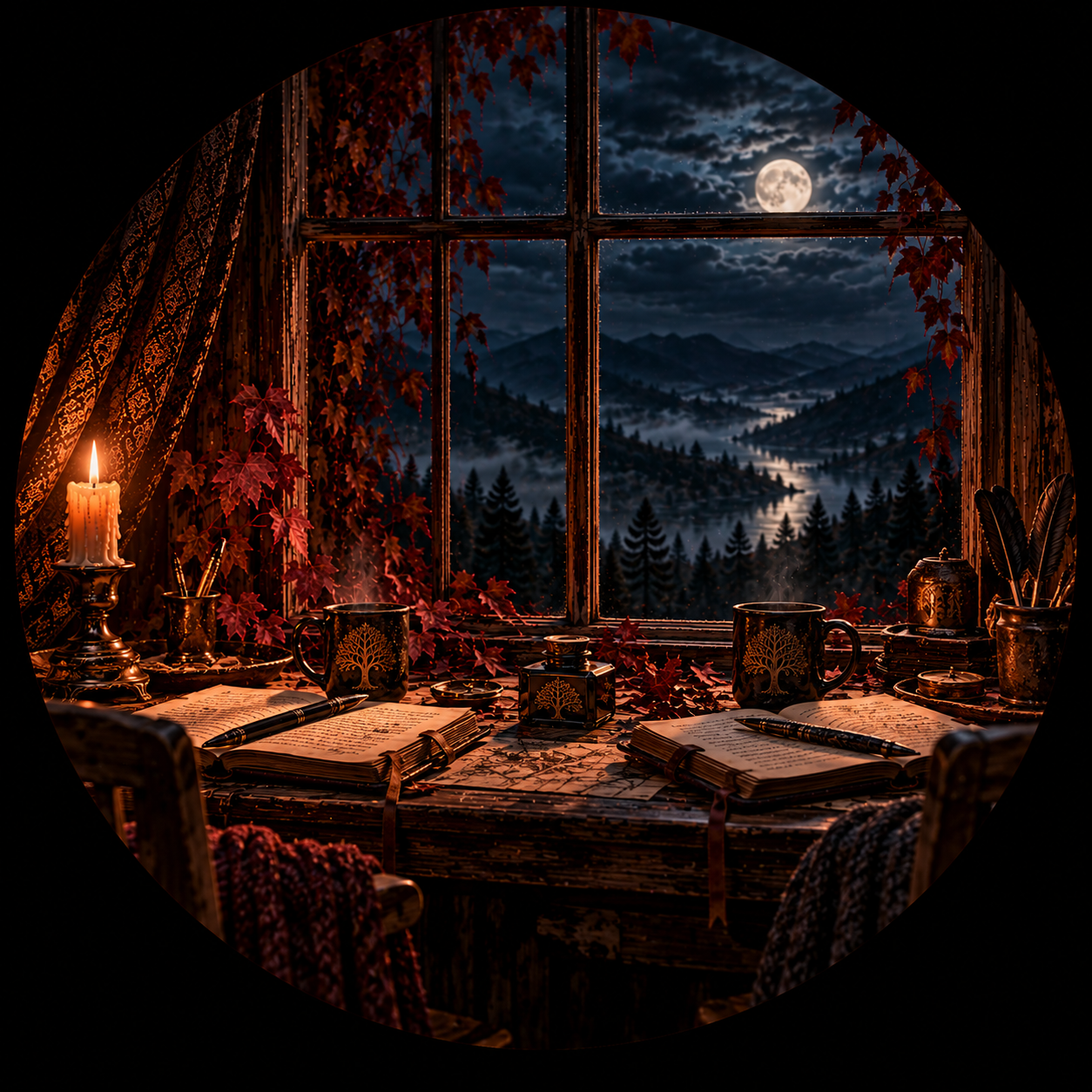
“Writers pairing with writers, trading the skill they have for the skill they need.”
At Darkling Press, working with authors isn’t a one-way relationship where the press hands down edits and the writer complies. It’s a trade.
Every writer walks in strong somewhere and thin somewhere else. One might have an instinct for structure but dread the marketing side. Another might write dialogue nobody can touch but freeze up on developmental notes. We built Darkling Press around that reality instead of pretending it away: writers pairing with writers, trading the skill they have for the skill they need, so nobody has to carry the part of this work they’re worst at completely alone.
“Talent shows up long before craft catches all the way up — the cooperative exists partly to close that gap.”
That’s also why the door stays open to writers who aren’t fully formed yet. We’re not looking only for polished manuscripts from people who’ve already solved every problem on their own. Submissions are open because talent shows up long before craft catches up, and the cooperative exists partly to close that gap.
Editorially, that means we stay close. Not a press that mails you a contract and disappears until pub day, but an editor who’s in the work with you, and a network of other writers who’ve likely already solved the exact problem you’re stuck on.
Long-Term Goals
Foundations first. Expansion earned.
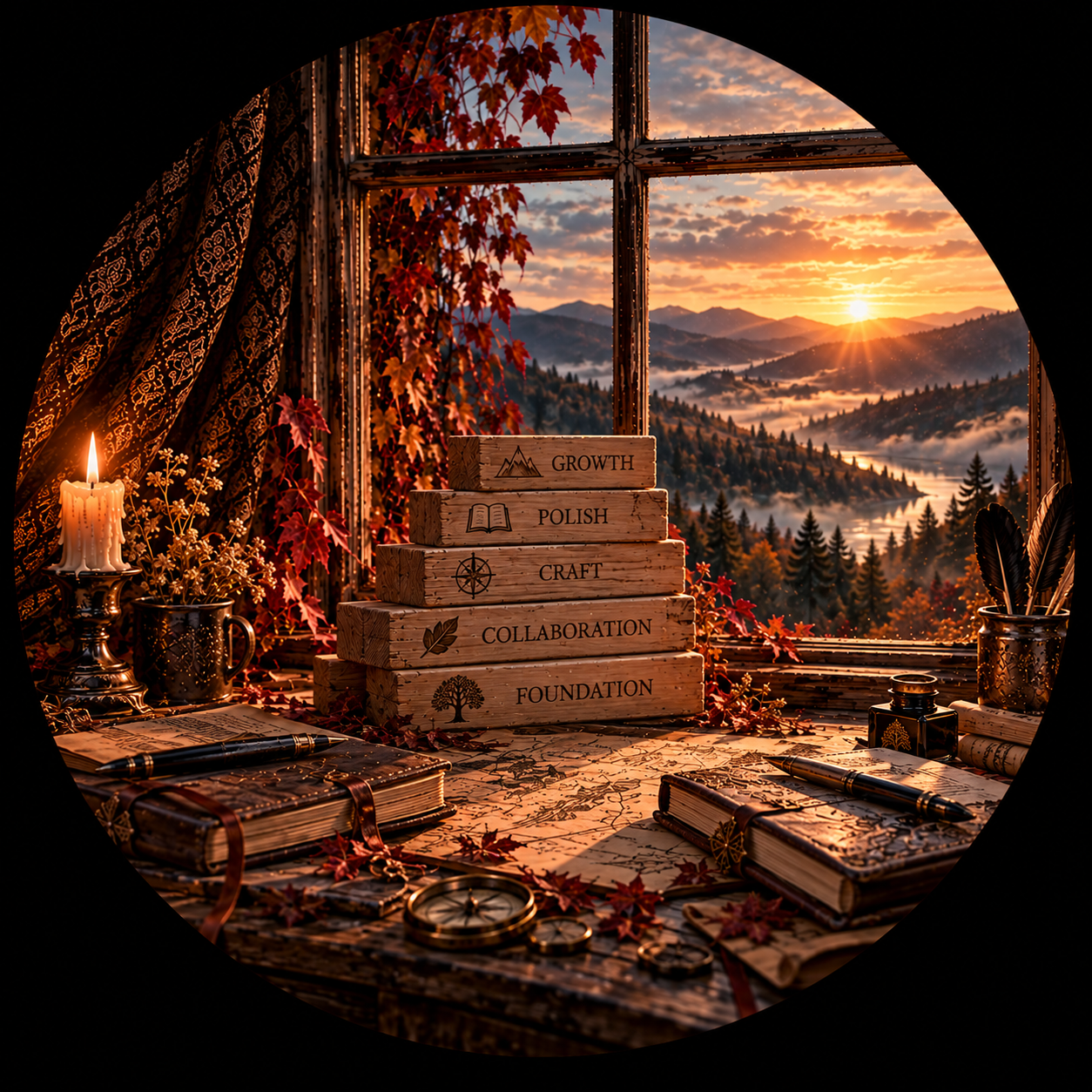
“Let growth follow from strength, instead of getting ahead of it.”
Darkling Press is being built one solid layer at a time. Right now, that means authors helping authors all the way to the finish line a cooperative that carries a manuscript from draft to a genuinely polished product, one worthy of what readers are actually paying for. Strong, concise, literary work within the genres we already publish: Appalachian gothic, dark literary fiction, and place-rooted paranormal.
“Let growth follow from strength, instead of getting ahead of it.”
That focus is deliberate, not permanent. As the house grows, as we build expertise within the cooperative and grow interest among both writers and readers, we expect to expand into other categories. But that expansion only works if the foundation underneath it is solid first. A model built on shared workflows and hard-won experience has to actually hold before it can carry more weight.
So the long-term goal isn’t just to publish more or publish wider. It’s to build the model right, prove that it works, and let growth follow from strength instead of getting ahead of it.
Core Values
Support the writer. Everything else follows.
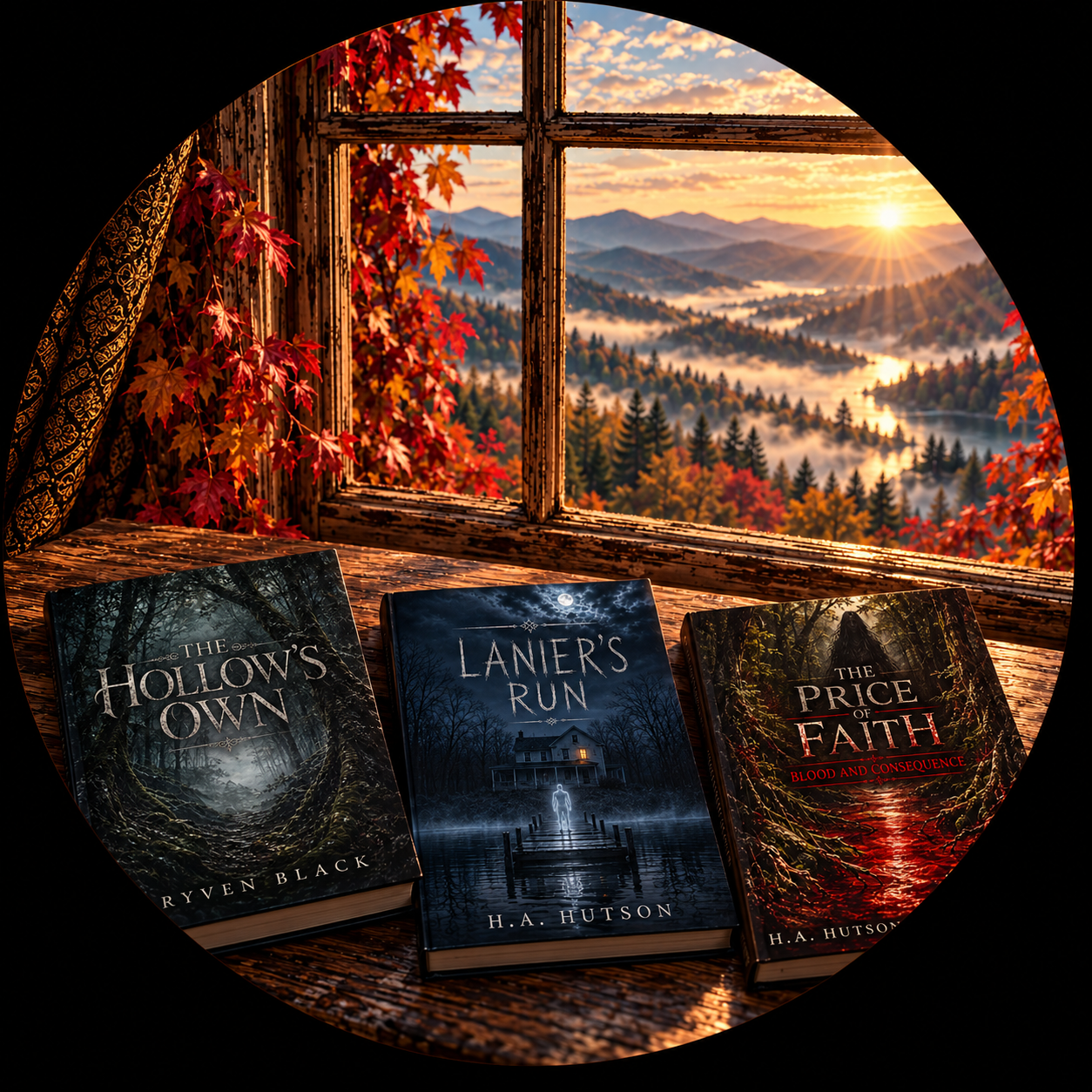
“Quality books, quality writers, quality experiences — all the way through.”
At the center of everything Darkling Press does is one core value: a good publishing experience for the writer, not as a nice-to-have, but as the actual mechanism that makes everything else work.
That starts with putting the product and its rewards back in writers’ hands, on a foundation that’s honest before it’s profitable, because anything less won’t hold. From there, everything else follows: a strong product readers genuinely enjoy, made by writers who are supported instead of worn down.
“Every writer who burns out and stops is a reader who loses a voice they would have loved.”
That distinction matters more than it looks on the surface. The industry loses good writers constantly, not for lack of talent, but because the stress of doing everything alone eventually costs more than the writing is worth to them. Every writer who burns out and stops is a reader who loses a voice they would have loved. We built Darkling Press to close that gap: reduce the weight on the writer, and the writing keeps coming.
That’s the actual product, in the end, an environment of real support, peer and editorial, where different voices converge instead of compete, and where Darkling Press comes to mean one thing: quality books, quality writers, quality experiences, all the way through.
Learn More About Darkling Press
Darkling Press was born from a devotion to the eerie, the uncanny, and the beautifully shadowed. It took shape in the hush of backwoods nights in Southwest Virginia, deep in Appalachia. A place where stories were devoured by the thin glow of a booklight and every rustle in the dark felt like a whisper meant only for us.
Contact Us
We welcome rights inquiries, media requests, and general questions. Contact Darkling Press to discuss permissions, reuse, and collaboration opportunities.

